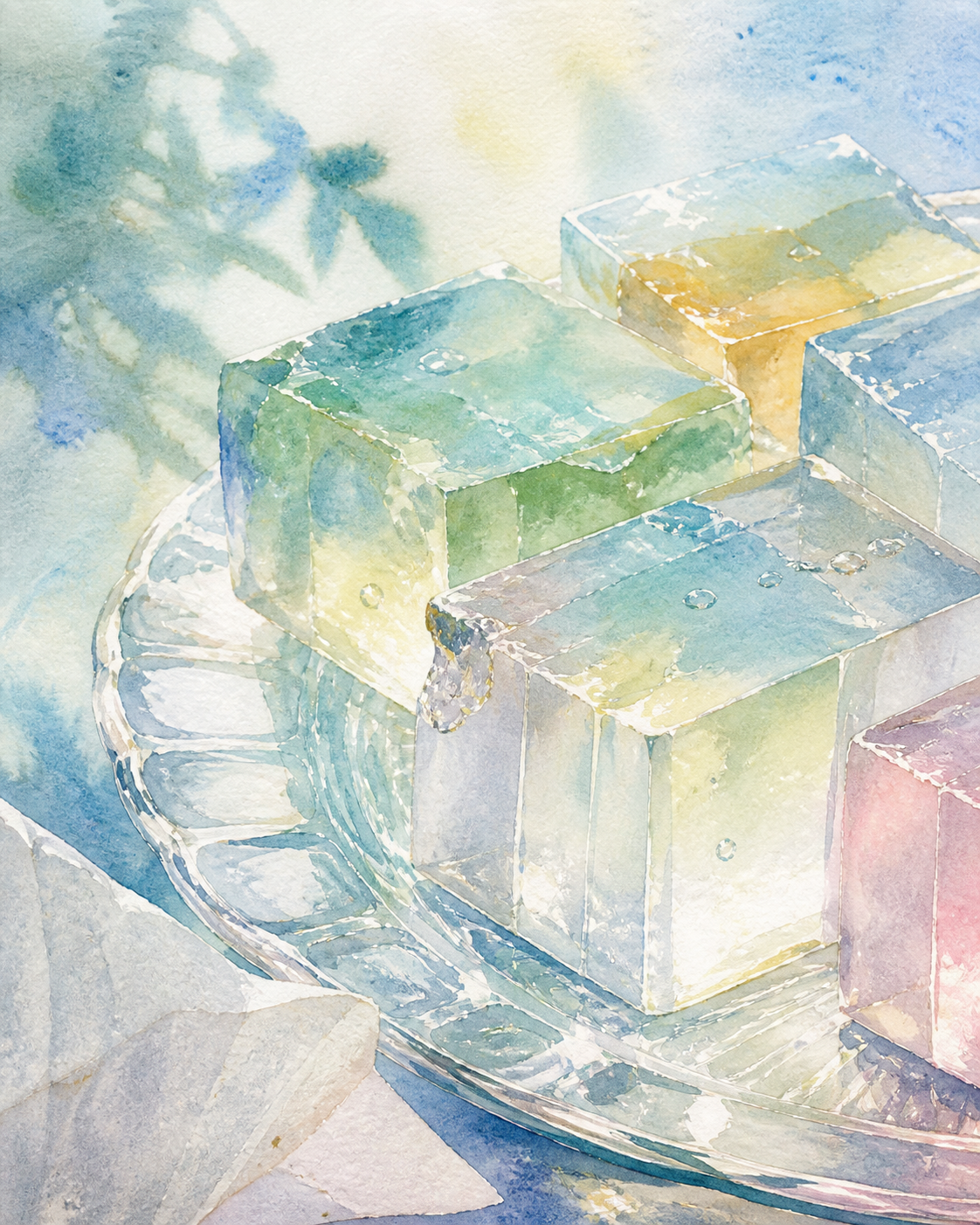
Crystals of Summer Silence
Critique
1. Introduction This watercolor painting presents a serene and luminous still life featuring several translucent cubes, likely traditional Japanese sweets, arranged on a glass plate. The work focuses on the delicate interplay between light, transparency, and color, capturing a sense of refined fragility. By utilizing the unique properties of the watercolor medium, the artist explores the optical qualities of semi-transparent forms in a sunlit environment. 2. Description The composition is dominated by several large, cubical forms with slightly rounded edges, resting on a clear, textured glass plate. These cubes exhibit a range of soft colors, including seafoam green, amber yellow, and pale violet, with some containing minute air bubbles suspended within their crystalline structures. The background features a wash of pale blue and yellow, overlaid with the blurred shadows of foliage. The glass plate itself shows intricate reflections and highlights that define its faceted rim and surface. 3. Analysis The artist demonstrates exceptional control over the watercolor medium, using wet-on-wet techniques to create smooth color transitions within the cubes. Sharp, precise lines define the geometric edges of the sweets, providing a structural contrast to the soft, diffused shadows in the background. The use of negative space and strategically placed white highlights effectively communicates the transparency of both the cubes and the glass plate. The color palette is cool and airy, reinforcing the painting's overall sense of luminosity. 4. Interpretation and Evaluation The work can be interpreted as an exploration of the transient beauty of light and the sensory appeal of simple objects. The technical execution is highly successful, particularly in the rendering of refracted light and the varying degrees of opacity within the sweets. There is a clear mastery of the medium's ability to convey weightlessness and glow. The composition feels balanced and intentional, guiding the viewer's eye across the rhythmic arrangement of the colored cubes. 5. Conclusion A viewer's initial perception of the subject matter is soon replaced by a deeper appreciation for the artist's ability to render complex optical phenomena. The painting succeeds in transforming a humble culinary subject into a sophisticated study of light and material. Ultimately, the work serves as a compelling example of how traditional watercolor techniques can be employed to capture the subtle, ethereal qualities of the physical world.
Same Subcategory
 Glow of Preserved Summer
 Benediction of the Golden Crust
Similar Artworks
 Crystallized Spring: A Symphony of Sweet Blooms
 Journey with a Coffee Cup
 Jewels of Summer
 Sweetness in Pastel
 Springs Delicate Awakening
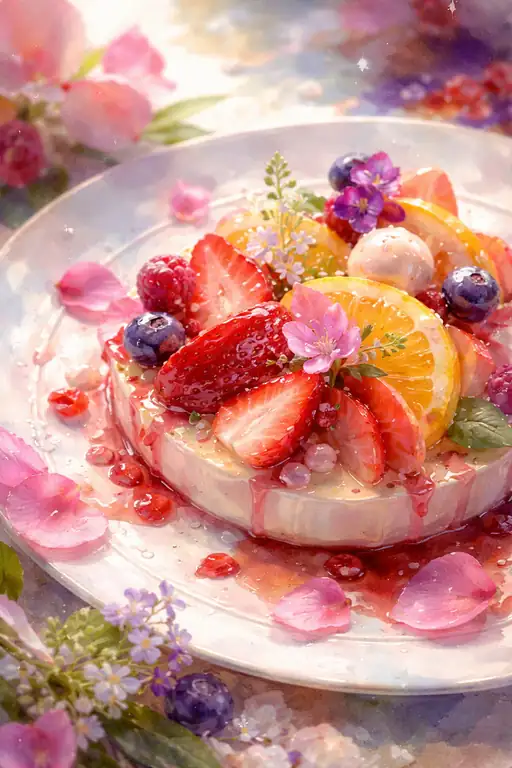 A Sun-Drenched Symphony of Eternal Sweetness
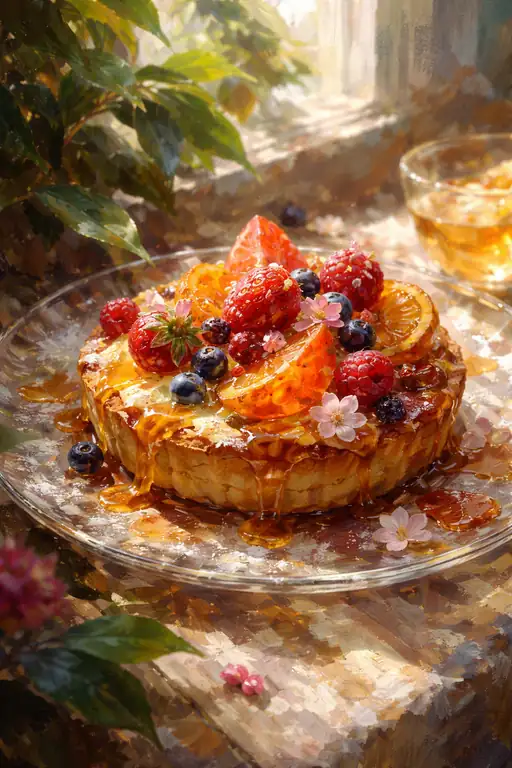 A Crystallized Garden Unfolding Under Summer's Breath
 Summer's Radiance in a Glass
 Prisms of Forgotten Joy
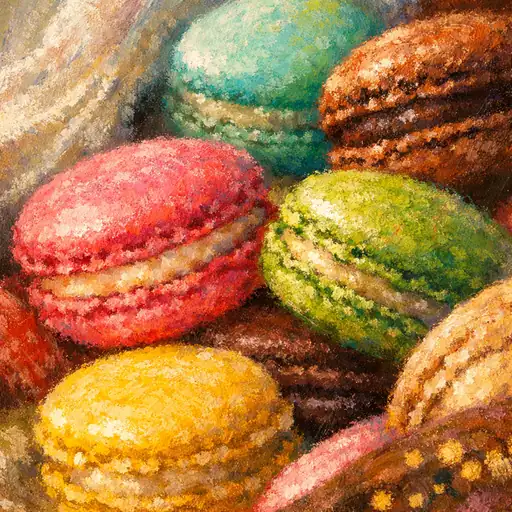 Rhapsody of Colorful Sweetness